
Author: admin
-
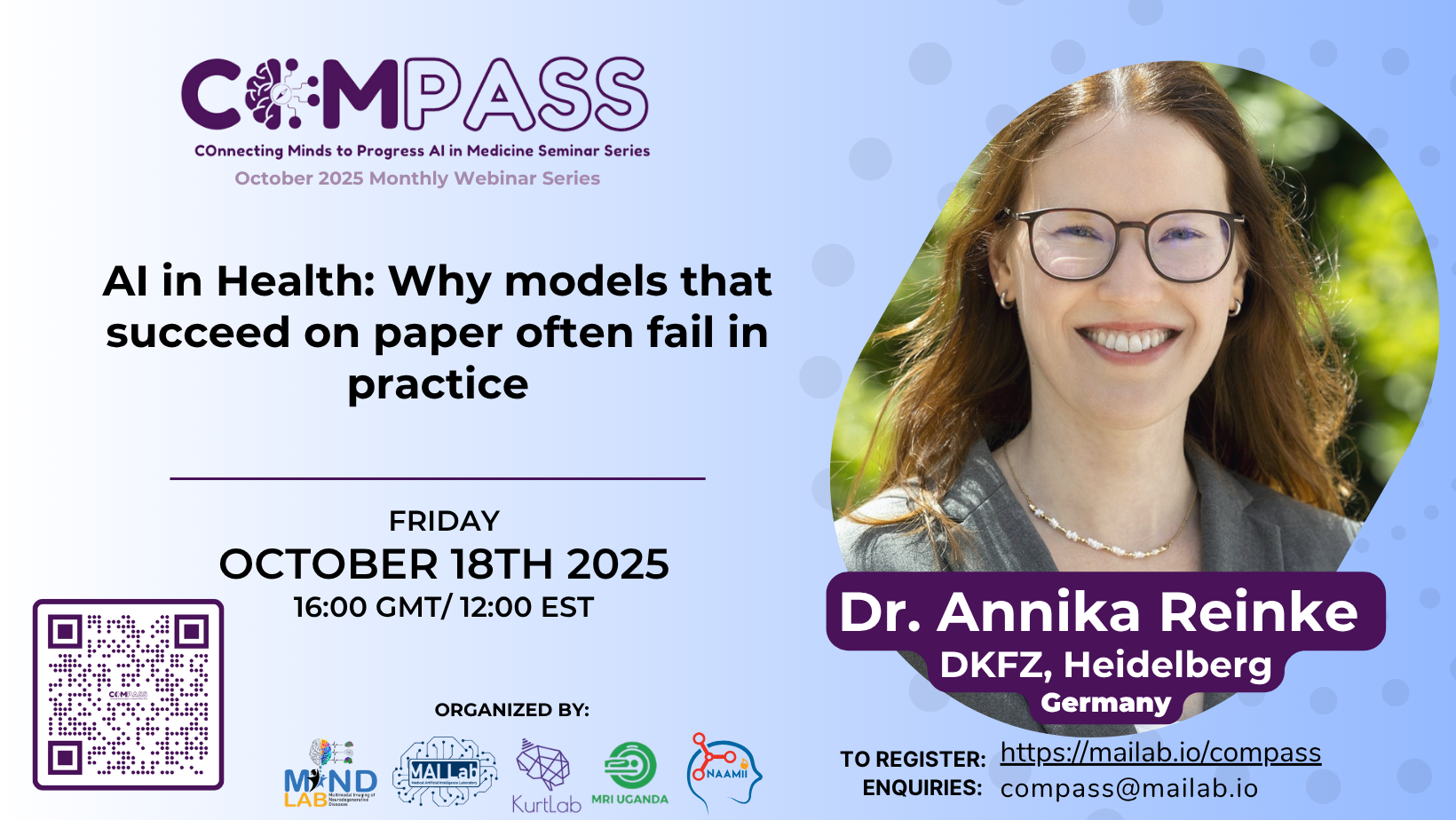
AI in Health: Why models that succeed on paper often fail in practice – COMPASS October 2025
Title: AI in Health: Why models that succeed on paper often fail in practice Speaker Bio Dr. Annika Reinke earned her PhD degree in 2023, focusing on eliminating flaws in biomedical image analysis validation. She continues her work as a postdoctoral researcher and deputy head of department by addressing underrepresented societally relevant topics, particularly scientific…
-
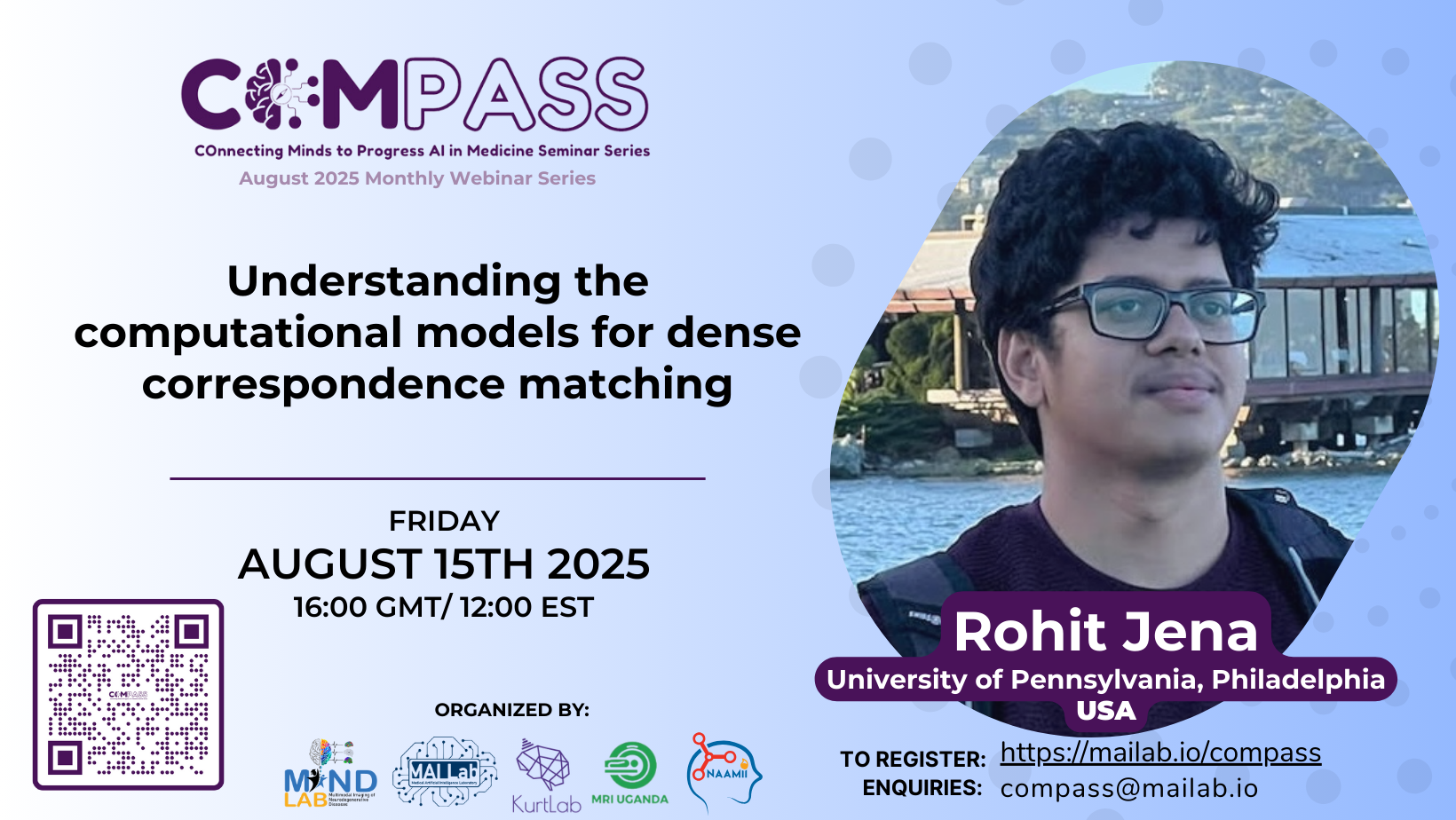
Understanding the computational models for dense correspondence matching – Rohit Jena– COMPASS August 2025
Title Understanding the computational models for dense correspondence matching Speaker Bio Rohit Jena is a Ph.D. candidate in Computer and Information Science at the University of Pennsylvania, where he is co-advised by Professors James C. Gee and Pratik Chaudhari. His research focuses on developing and unraveling the nature of task-specific, self-supervised representations for correspondence matching problems,…
-
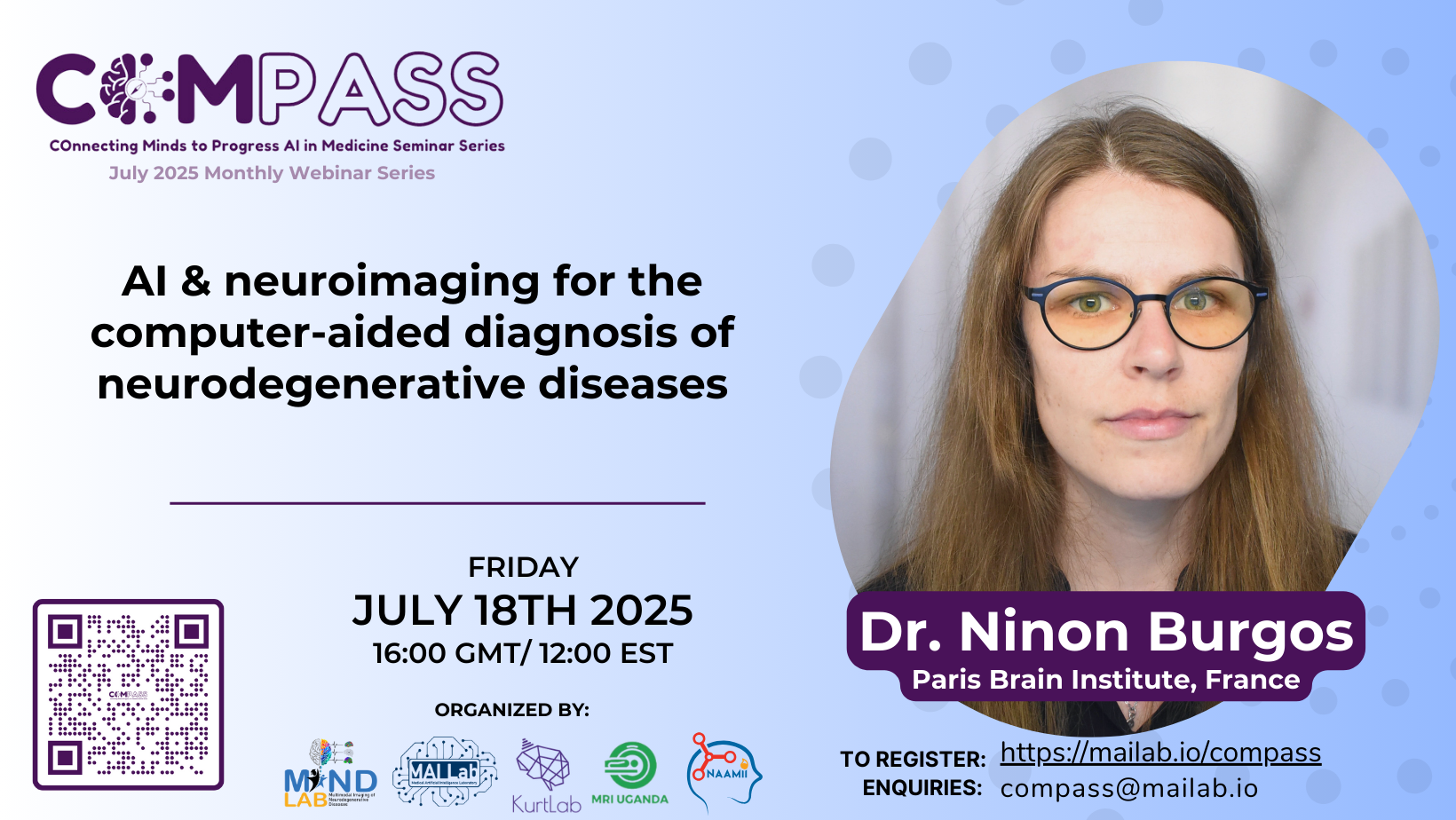
AI & neuroimaging for the computer-aided diagnosis of neurodegenerative diseases – Dr Ninon Burgos– COMPASS July 2025
Title: AI & neuroimaging for the computer-aided diagnosis of neurodegenerative diseases Speaker Bio: Ninon Burgos is a CNRS researcher at the Paris Brain Institute, co-head of the ARAMIS Lab, and a fellow of PR[AI]RIE, the PaRis Artificial Intelligence Research InstitutE. She completed her PhD in 2016 at University College London. In 2019, she received the ERCIM…
-
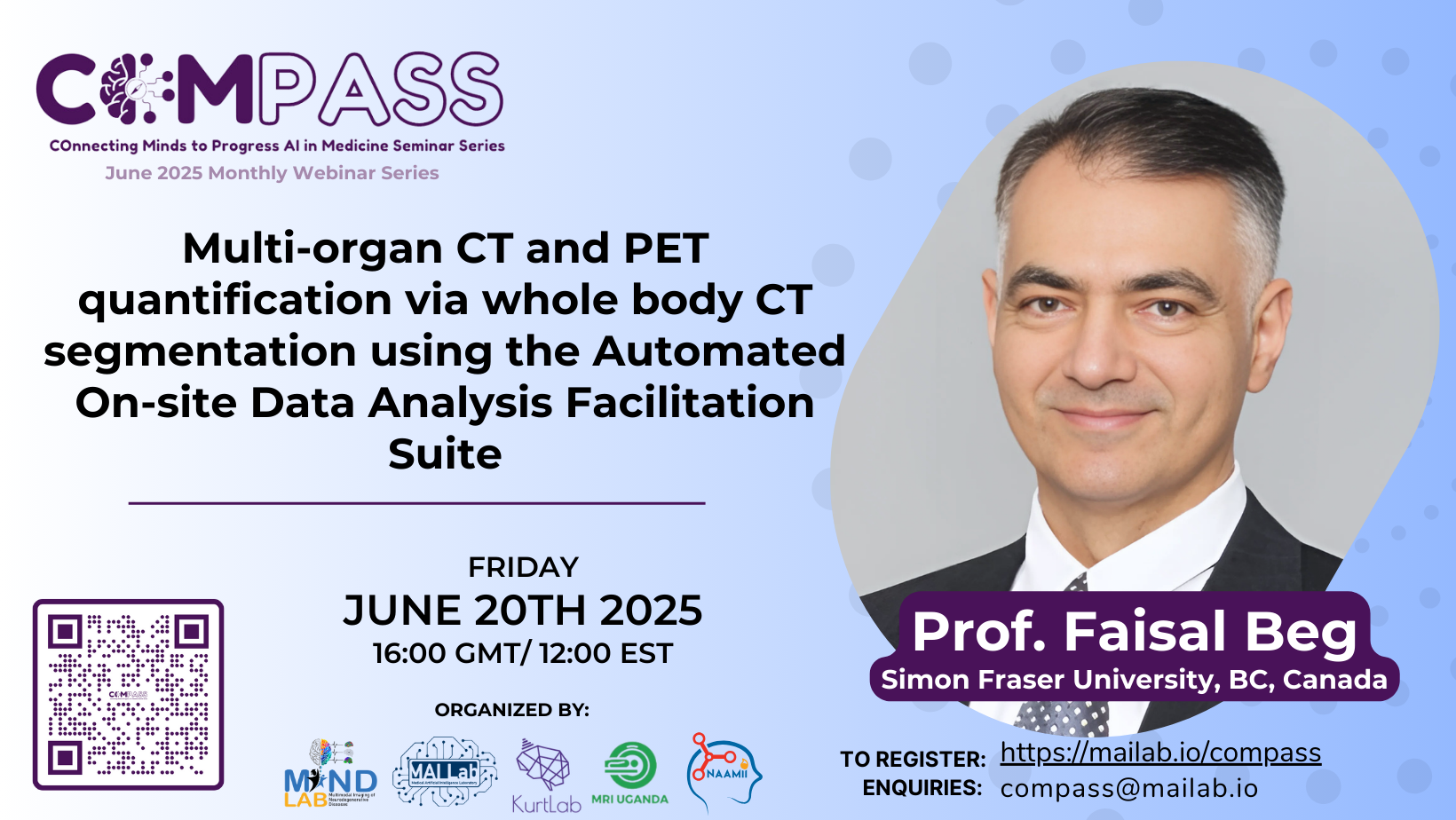
Multi-organ CT and PET quantification via whole body CT segmentation using the Automated On-site Data Analysis Facilitation Suite – Prof Faisal Beg – COMPASS June 2025
Title: Multi-organ CT and PET quantification via whole body CT segmentation using the Automated On-site Data Analysis Facilitation Suite Speaker Bio: Dr. Mirza Faisal Beg is a Professor in the School of Engineering Science at Simon Fraser University, and the Chief Executive and the Chief Scientific Officer of Voronoi Health Analytics Inc., located in Vancouver,…
-
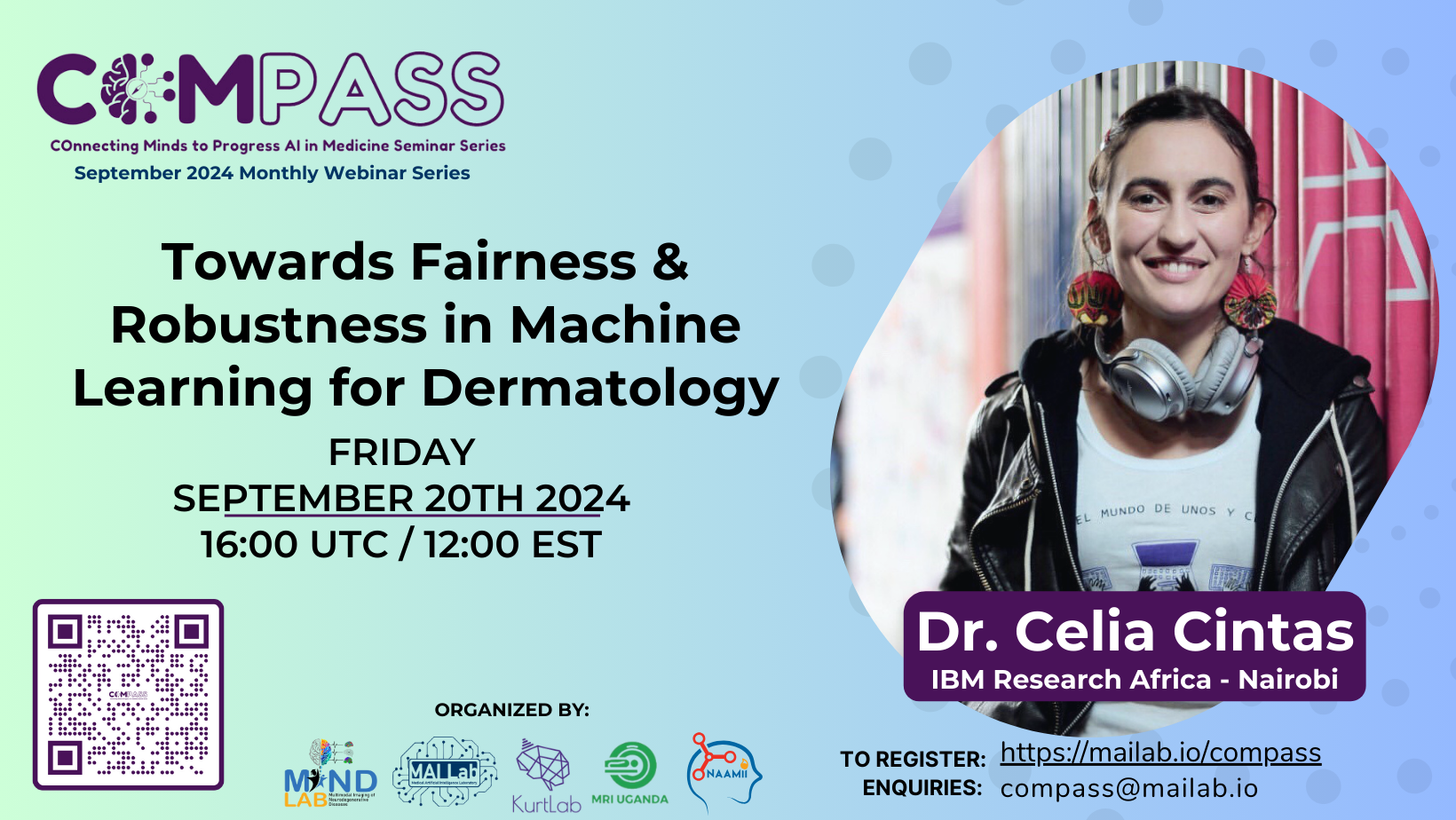
Towards Fairness & Robustness in Machine Learning for Dermatology – Celia Cintas – COMPASS September 2024
Title: Towards Fairness & Robustness in Machine Learning for Dermatology Abstract: Recent years have seen an overwhelming body of work on fairness and robustness in Machine Learning (ML) models. This is not unexpected, as it is an increasingly important concern as ML models are used to support decision-making in high-stakes applications such as mortgage lending, hiring, and diagnosis in…
-
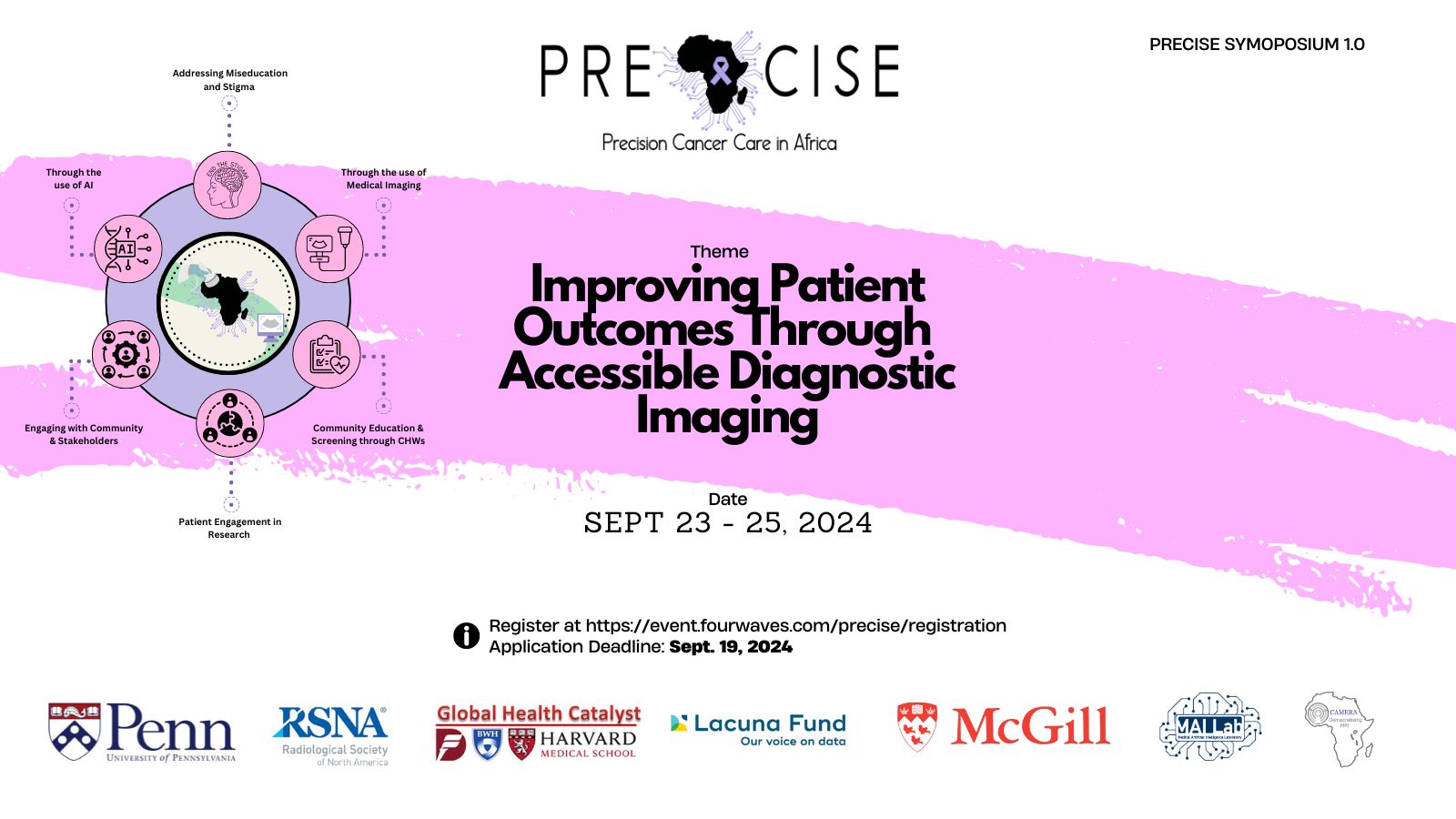
Precise Symposium 1.0
🌟 Join Us for PRECISE: Precision Cancer Care in Africa!🌟 Theme: Improving Patient Outcomes through Accessible Diagnostic Imaging 🗓 FREE Registration: Now open until Sept. 21🔗 Register here: event.fourwaves.com/precise 🗓 Conference Schedule: Pre-Conference & Hackathon:📅 Sept. 23, 9:00 – 16:30 (West Africa Standard Time)📍 NICRAT Building, Abuja, Nigeria Conference Day 1 & Day 2:📅 Sept.…
-
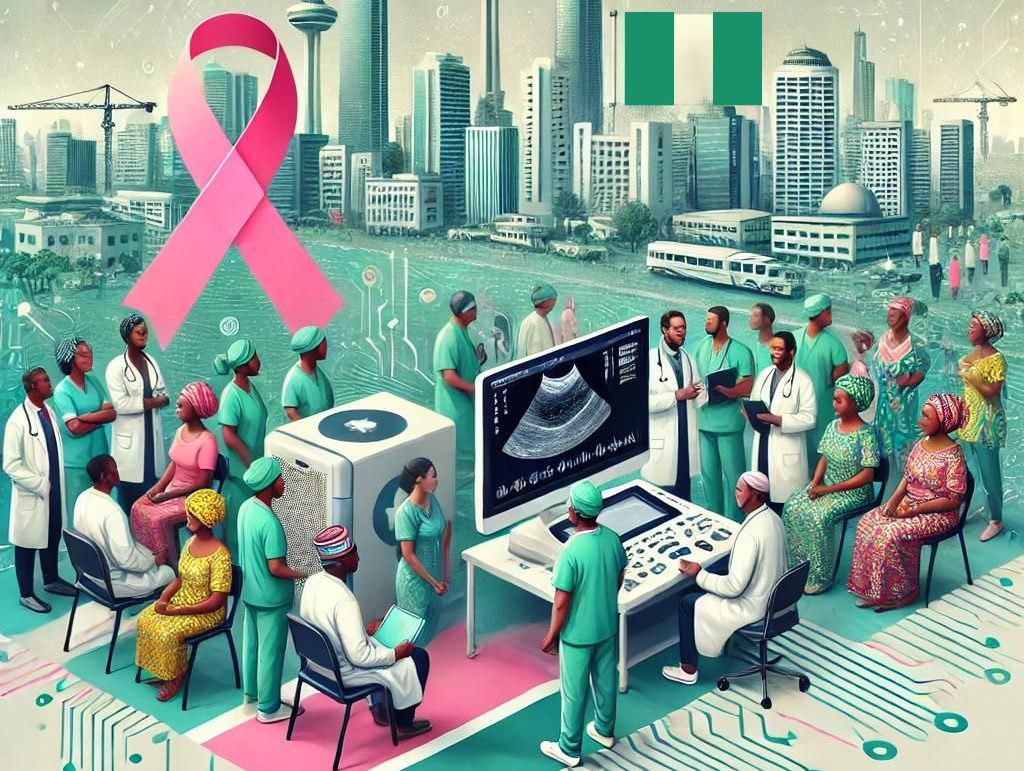
Join the Revolution in Breast Cancer Diagnosis!
MAI Lab is on a mission to transform breast cancer care in Nigeria with cutting-edge AI solutions. We’re launching an innovative project in Lagos and we are looking for passionate collaborators to make a real impact. Are you: If this sounds like you, we want you on our team! Apply now and be part of…
-
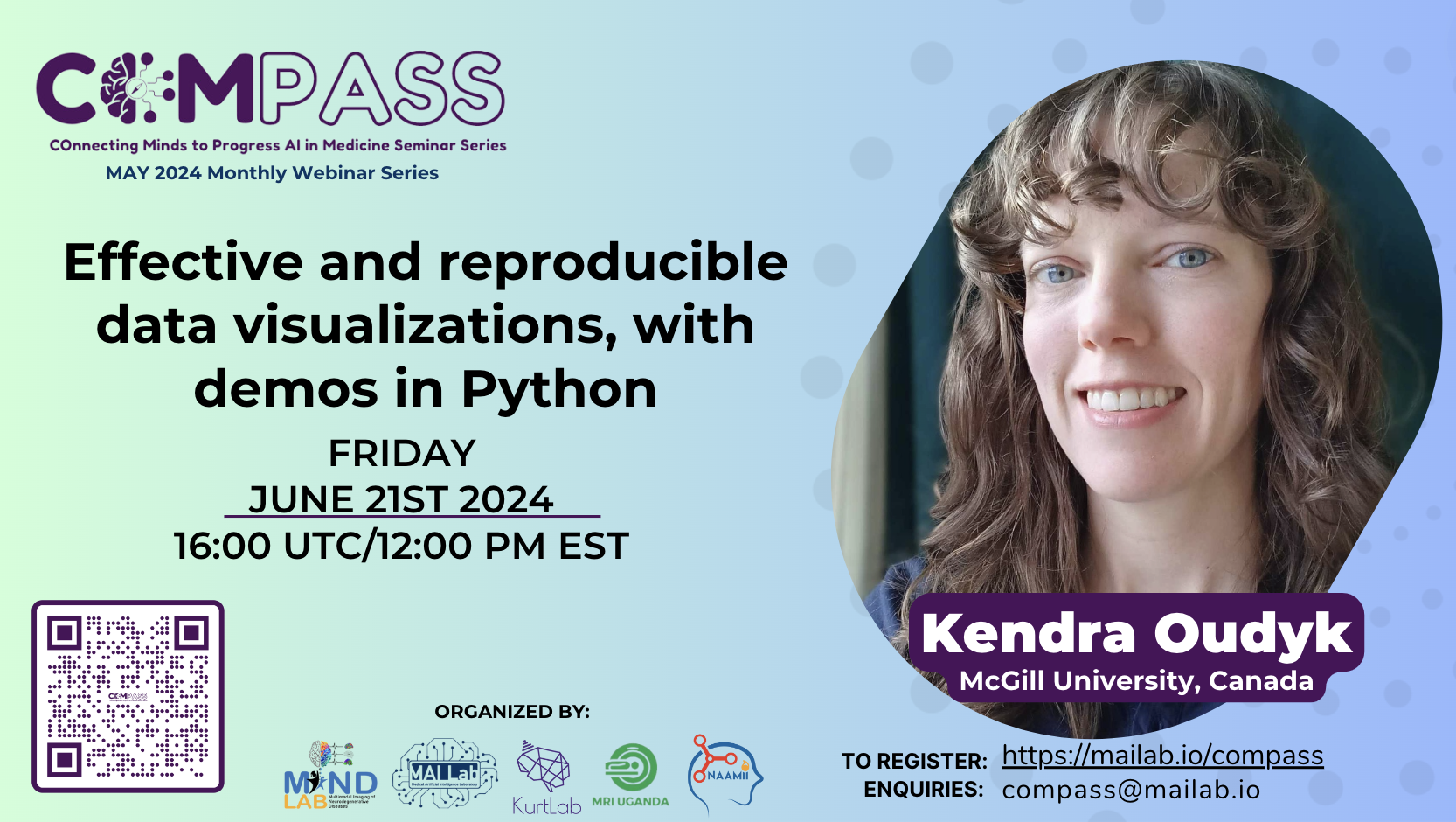
Effective and reproducible data visualizations, with demos in Python – Kendra Oudyk – COMPASS June 2024
Title: Effective and reproducible data visualizations, with demos in Python Abstract: This talk explores the principles and practices of data visualization, with demonstrations in Python. We will cover best practices for creating transparent, shareable, and reproducible visualizations, emphasizing the importance of considering human perception when creating visualizations.Key topics include: 1) Data visualization principles and best…
-
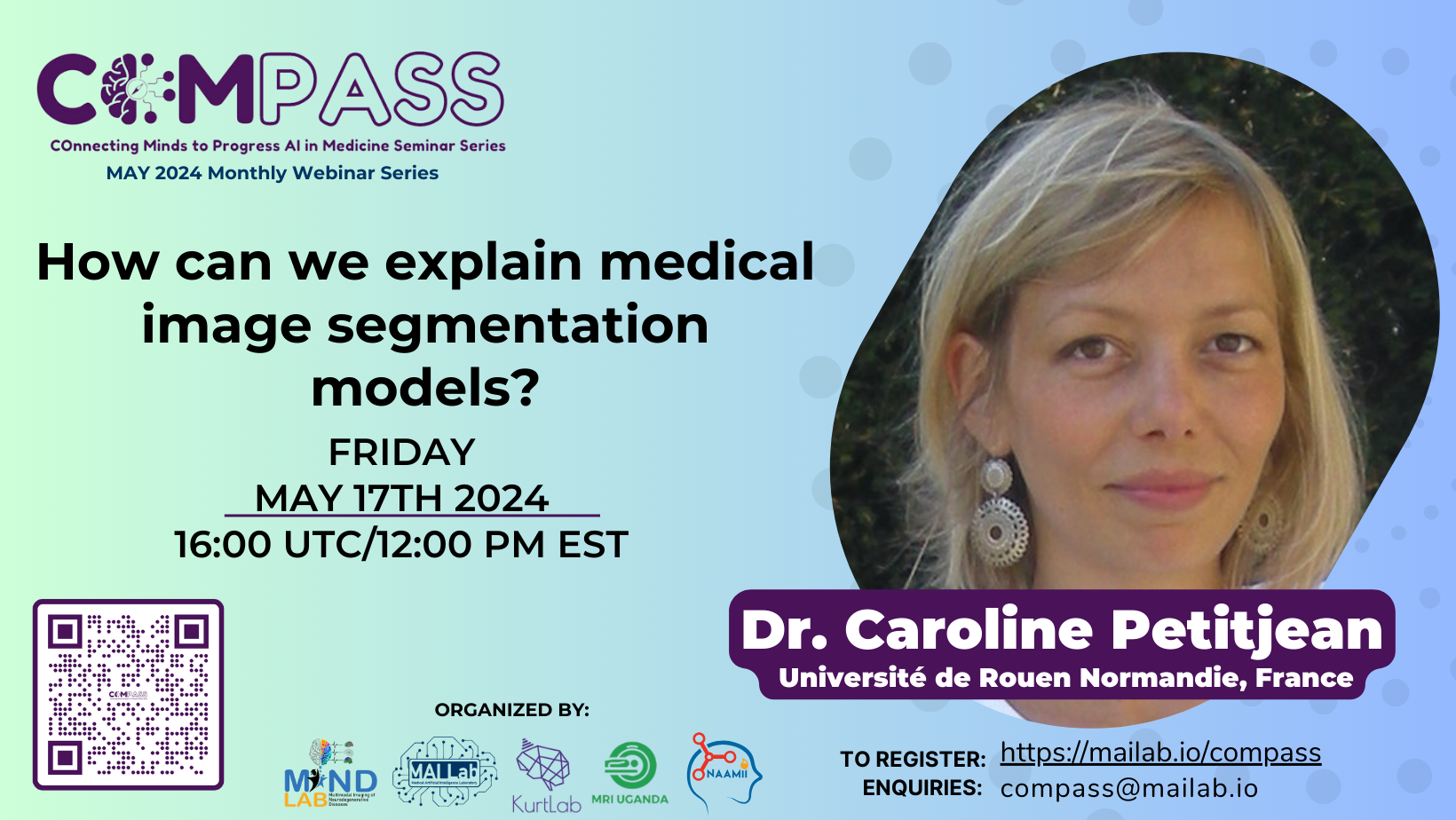
How can we explain medical image segmentation models – Dr. Caroline Petitjean – COMPASS May 2024
Title: How can we explain medical image segmentation models? Abstract: Explainability is a crucial field of AI, and in medical image analysis in particular, to ensure building trust with the clinicians. In computer vision, most of the explainability works have historically focused on image classification, notably to produce saliency maps that highlight the pixels that…
-
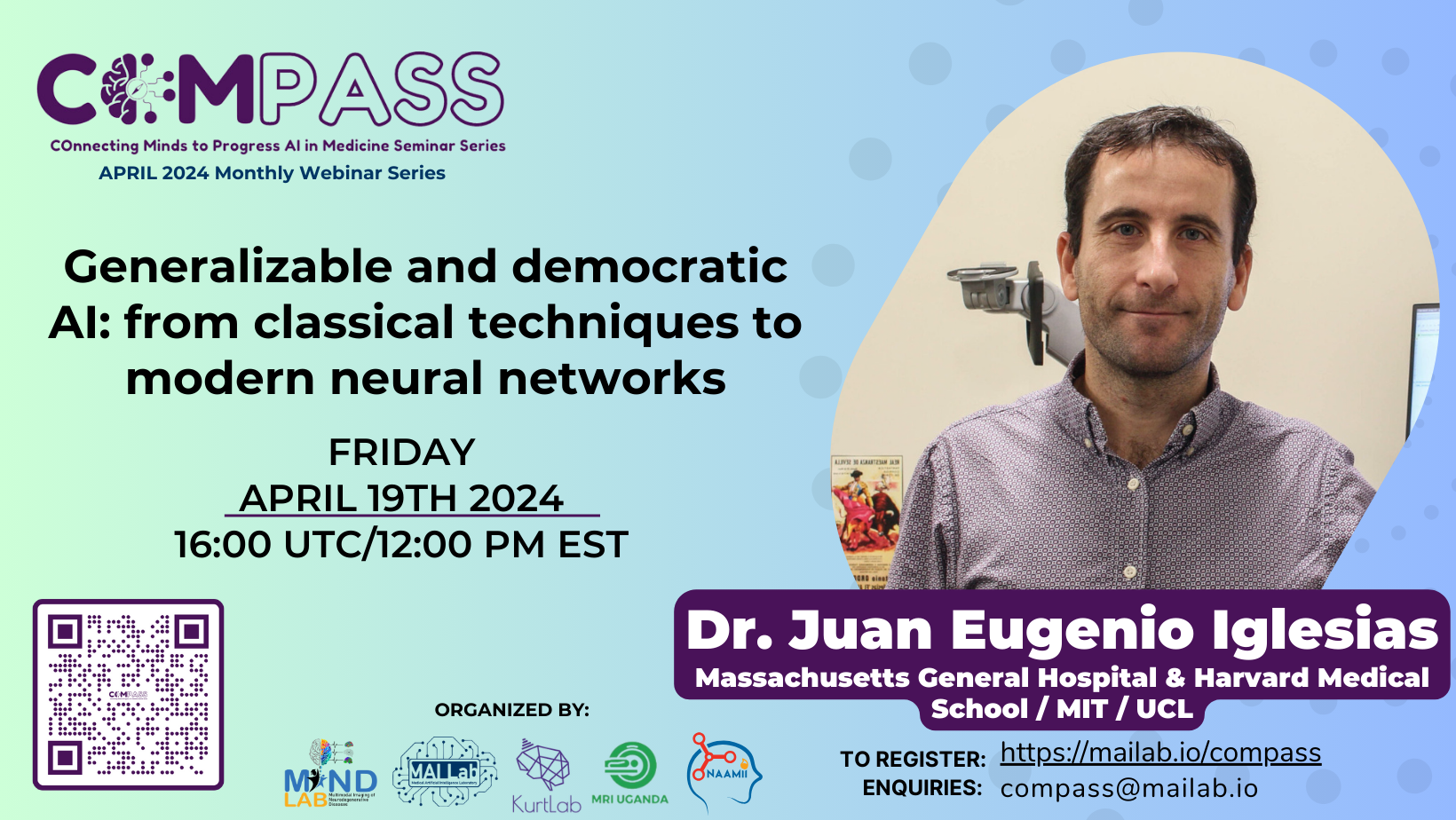
Generalizable and democratic AI: from classical techniques to modern neural networks – Dr. Juan Eugenio Iglesias – COMPASS April 2024
Title: Generalizable and democratic AI: from classical techniques to modern neural networks Abstract: Every year, millions of brain MRI scans are acquired in hospitals, which is a figure considerably larger than the size of any research dataset. Therefore, the ability to analyze such scans could transform neuroimaging research – particularly for underrepresented populations that research-oriented…